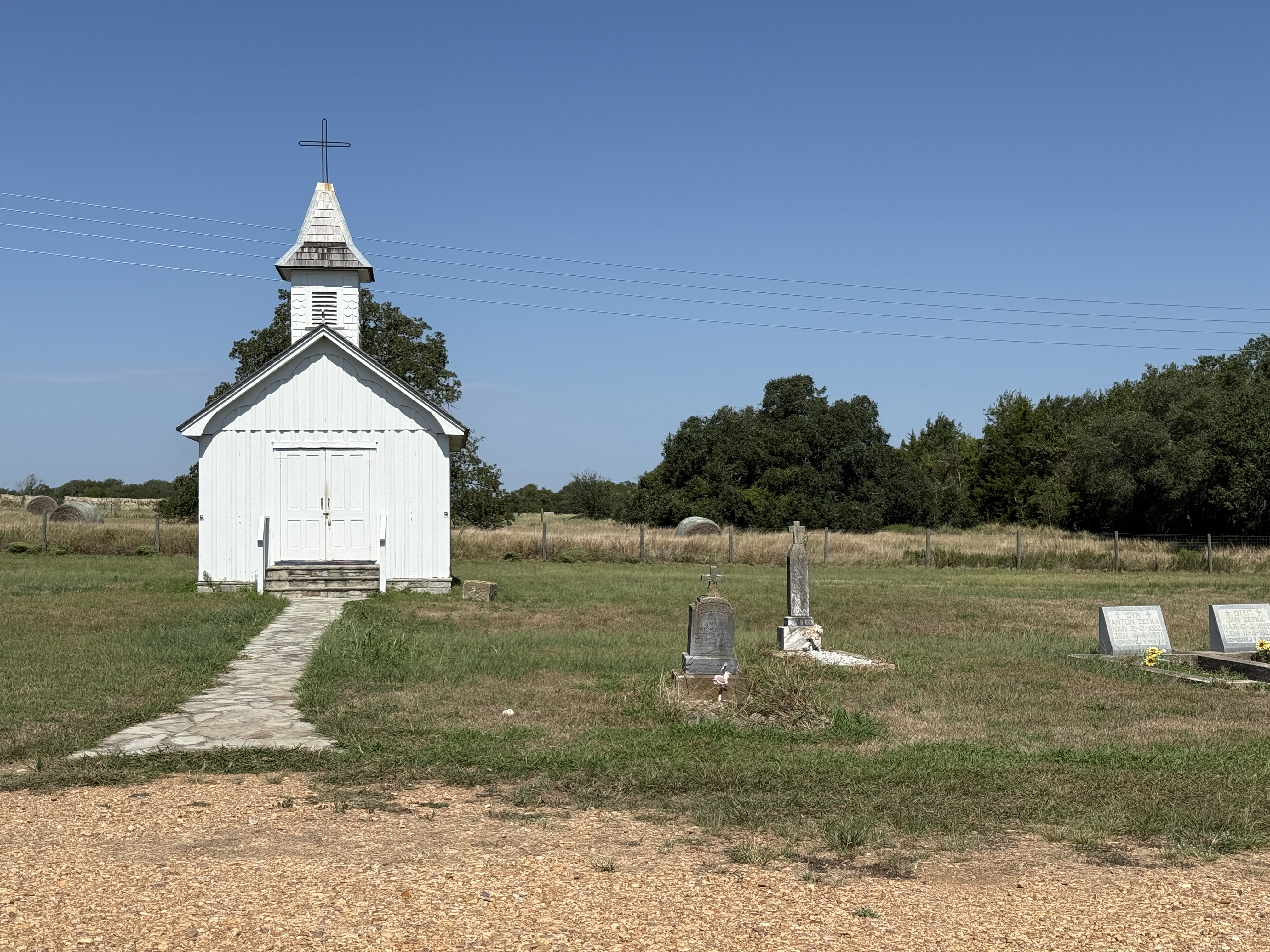
One of the best things about driving Texas backroads is making an unexpected discovery. On a Friday adventure to visit more of the Painted Churches of Texas, Cheryl and I were traveling from Praha to St. John along County Line Road when we passed Velehrad Cemetery. It wasn’t on our itinerary, but something about those old gravestones standing quietly beneath the Texas sky made us turn around and take a closer look.
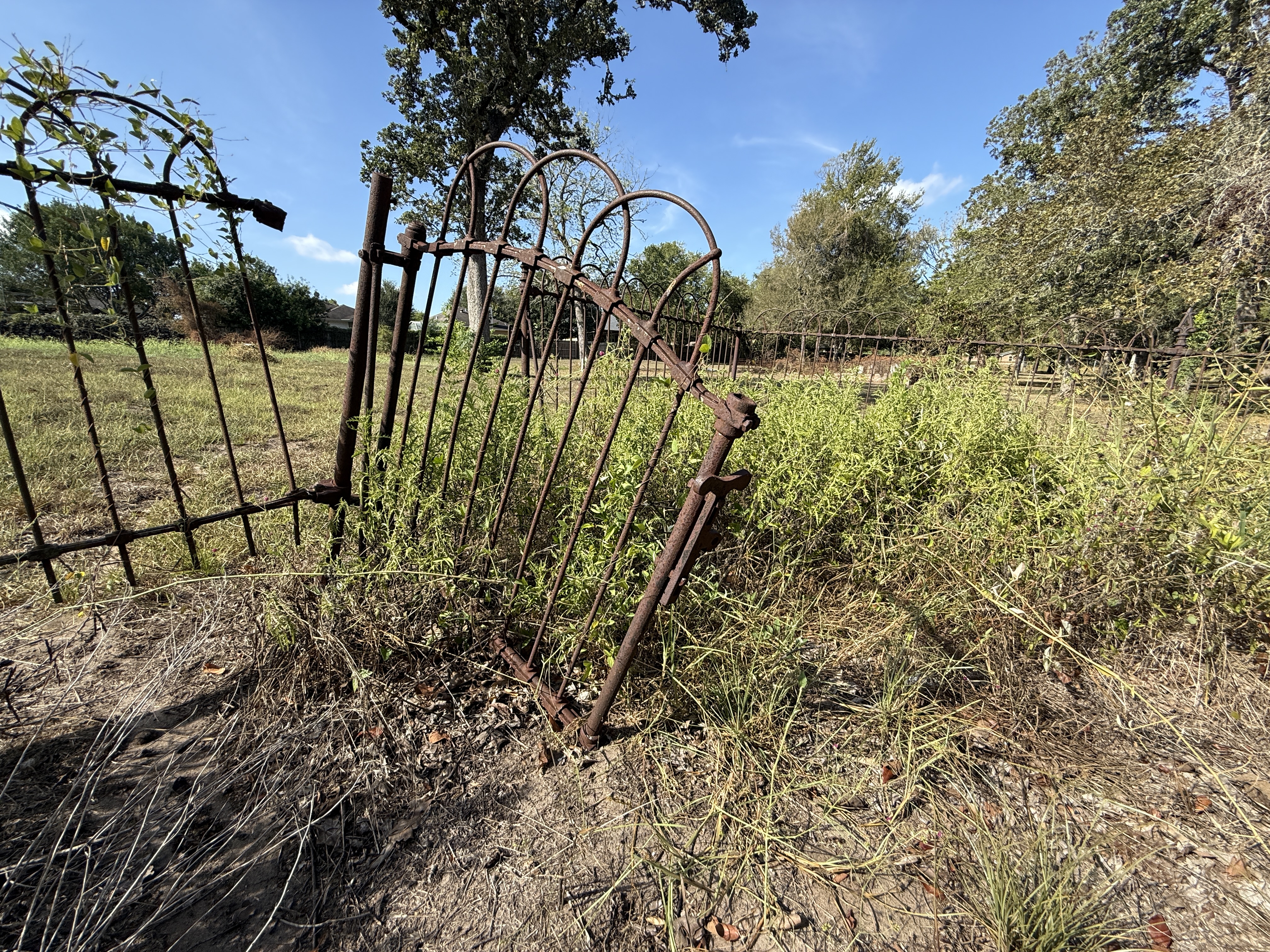
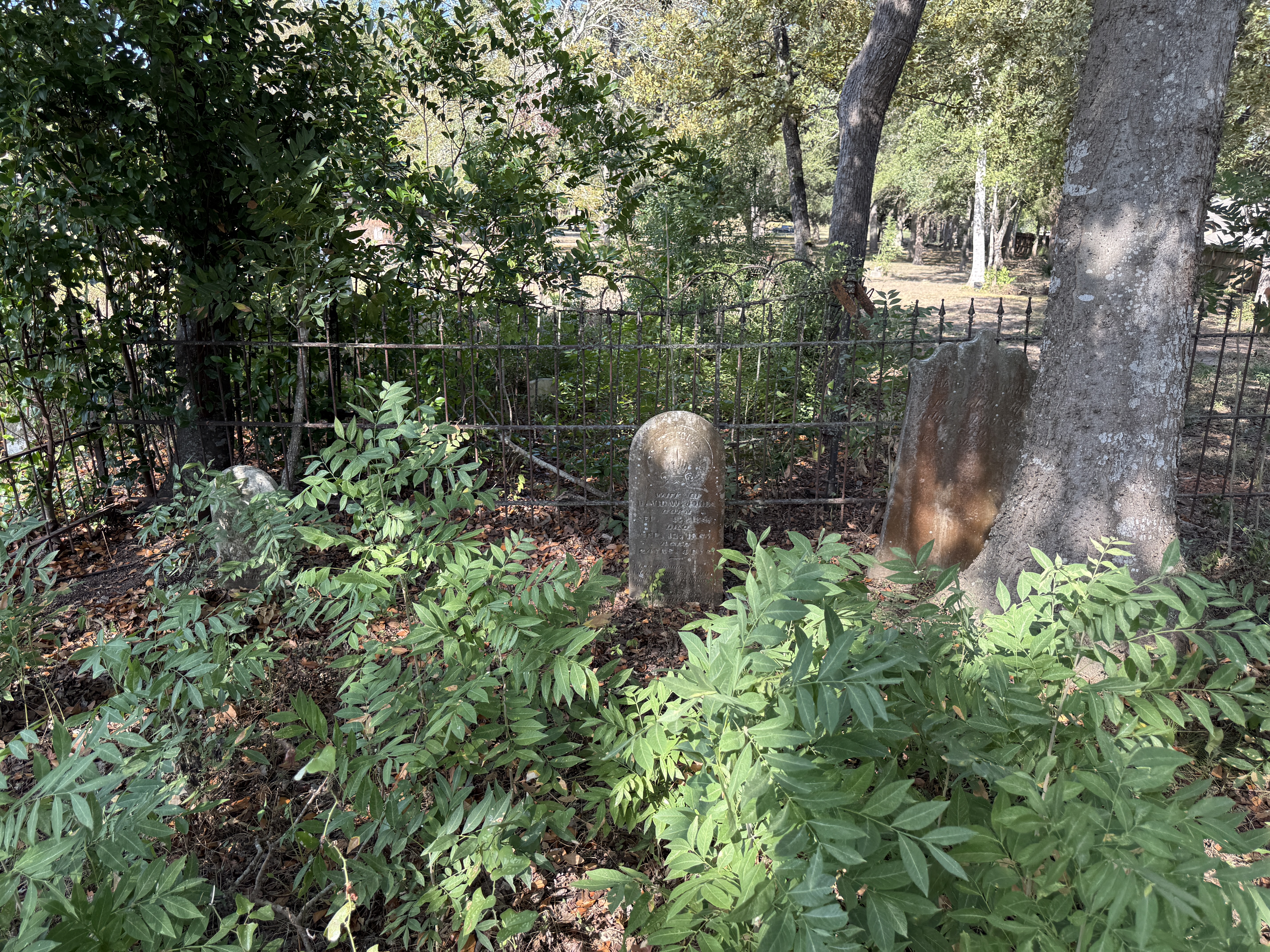
The cemetery wasn’t particularly impressive, and we could easily have kept driving. But curiosity won out. When we pulled off the county road onto the cemetery site, we found a collection of weathered grave markers standing quietly beneath the Texas sky. This remote burial ground was a place where mourners had gathered time and again to bid their final farewells and where the Texas soil had been made wet with their tears.
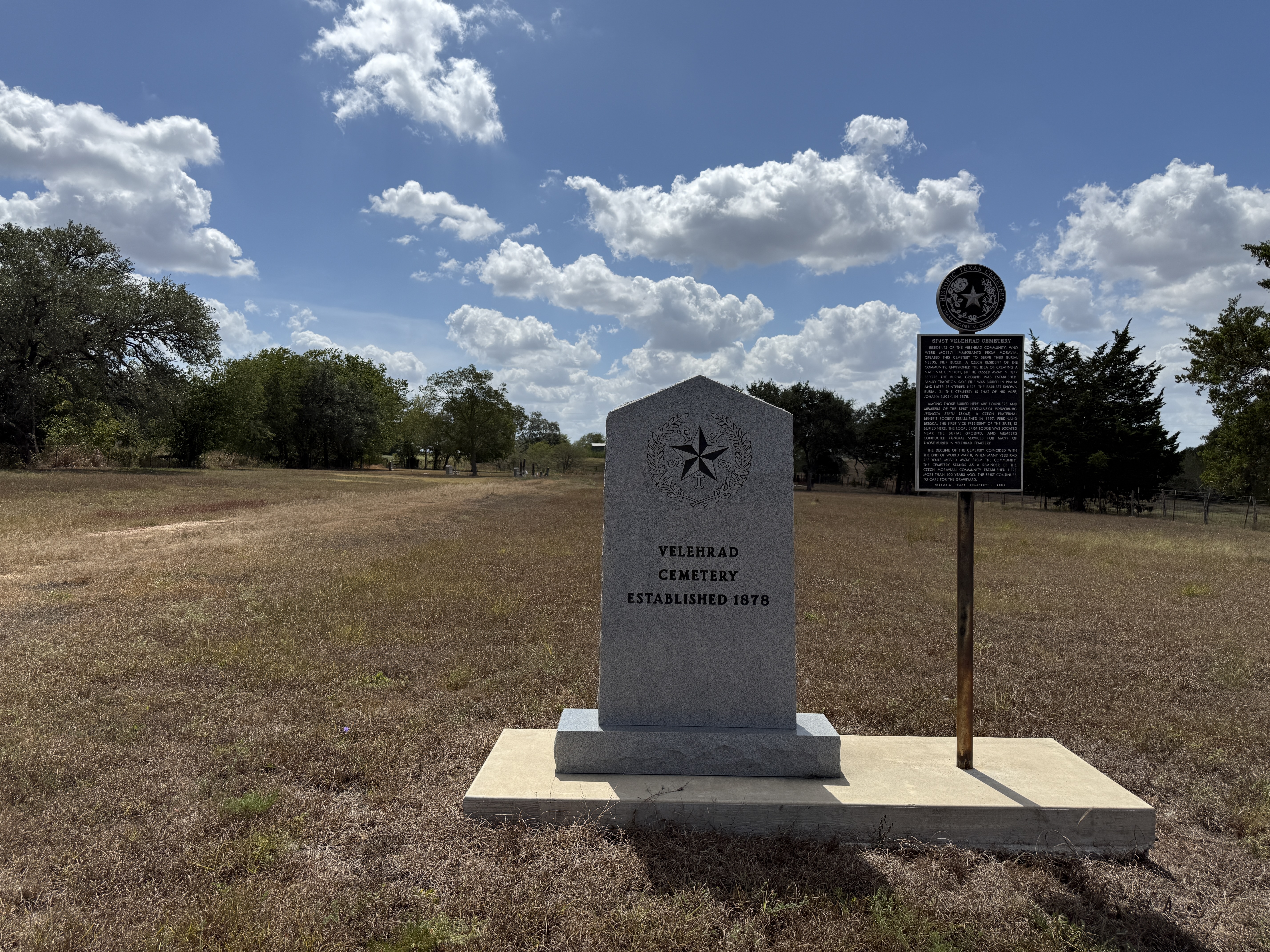
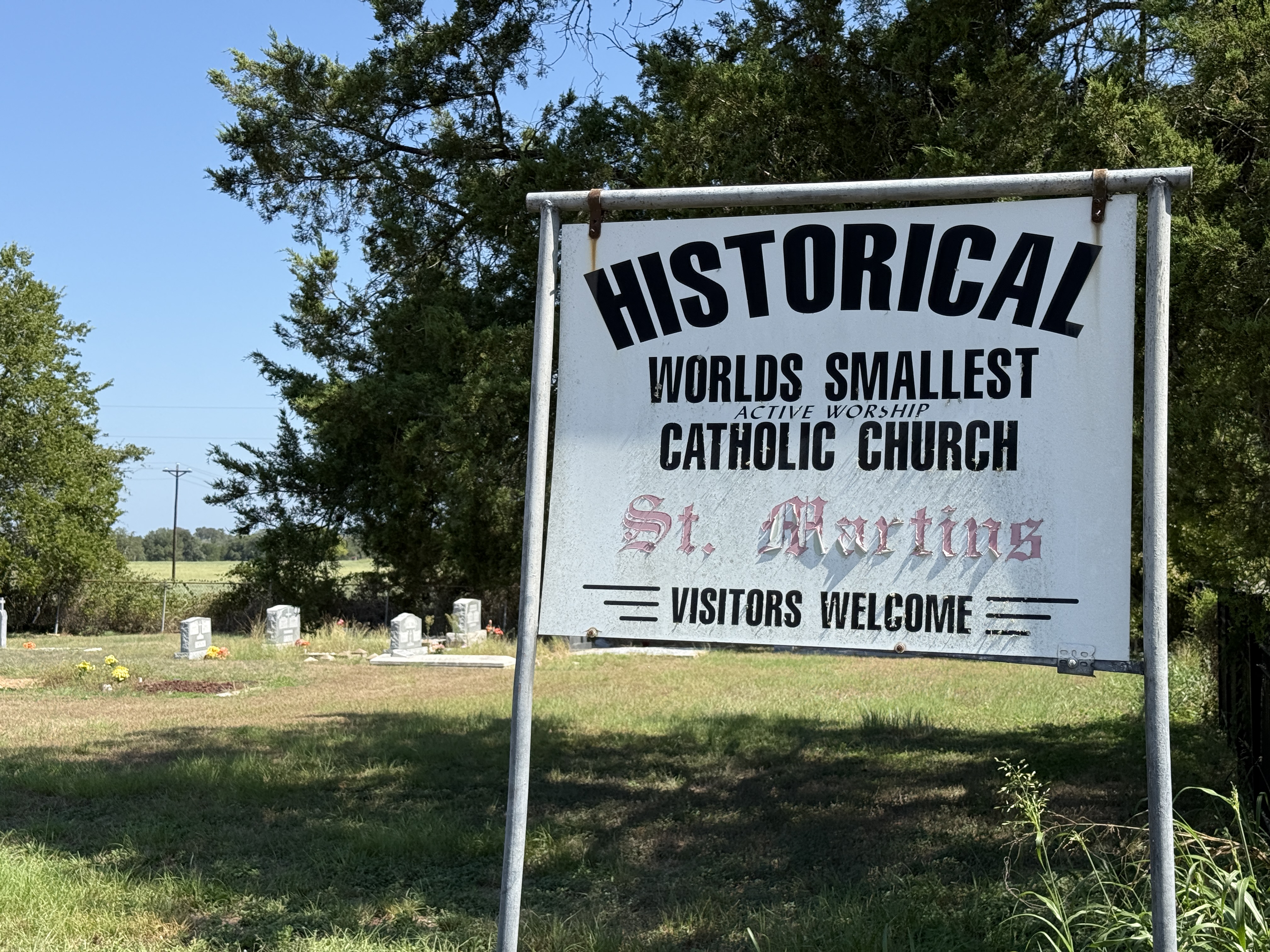
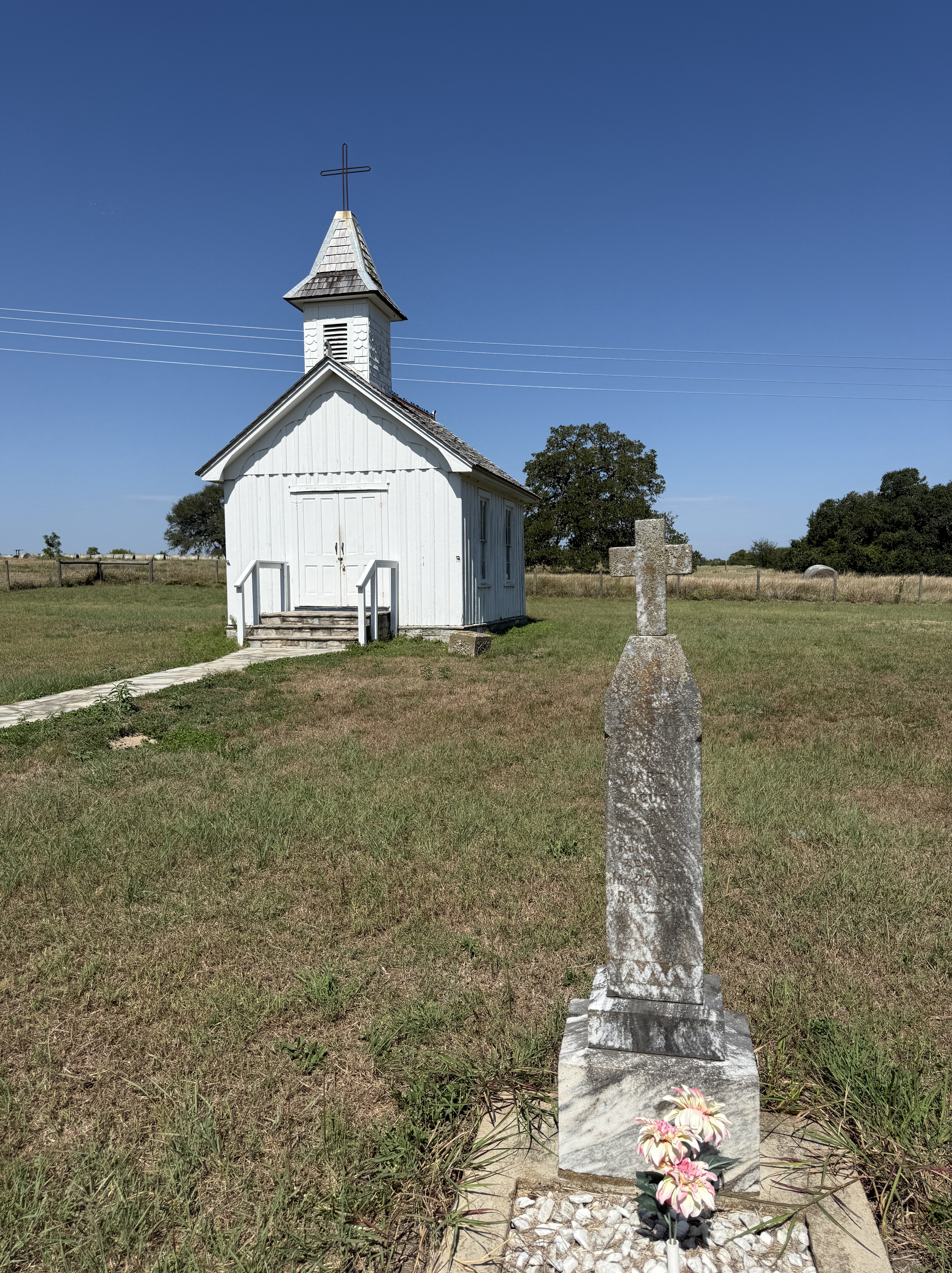
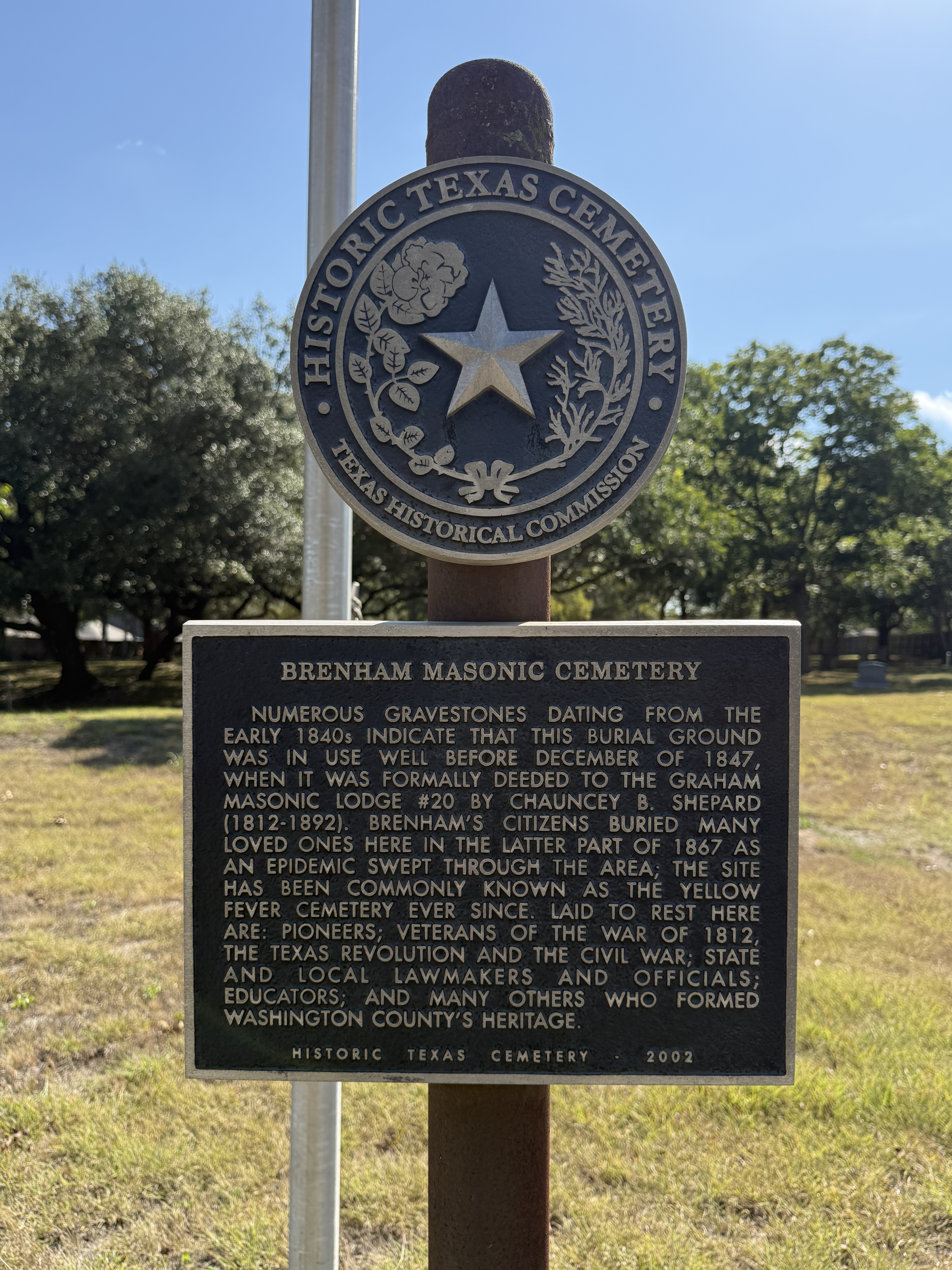
At the entrance, one marker dates the cemetery’s founding to 1878, while another identifies it as a Historic Texas Cemetery recognized by the Texas Historical Commission. Its official name is SPJST Velehrad Cemetery. The initials SPJST come from the Czech name Slovanská Podporující Jednota Státu Texas, translated as the “Slavonic Benevolent Order of the State of Texas.”
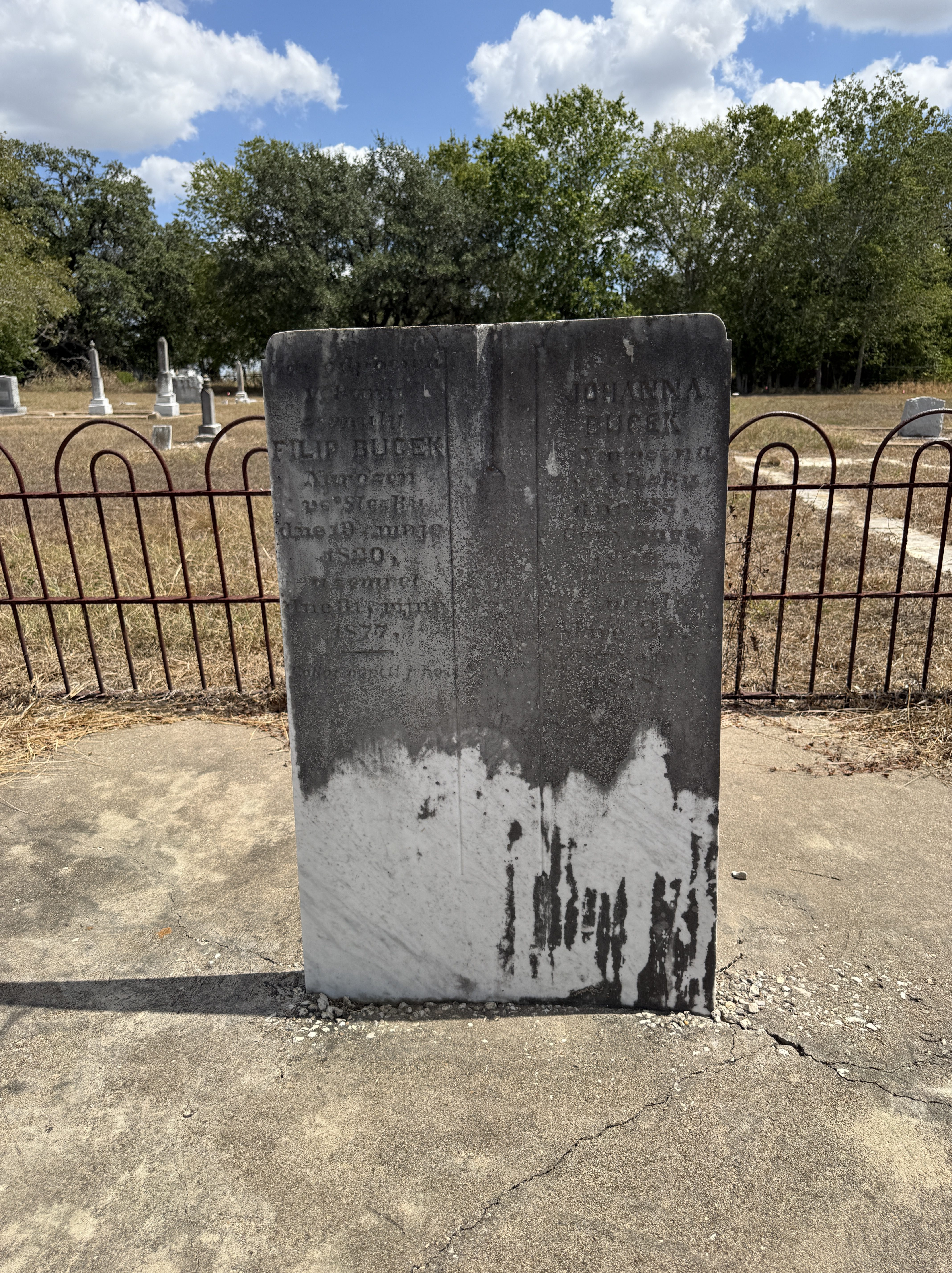
Filip Buček, a Czech immigrant, envisioned establishing a cemetery for the Velehrad community but died in 1877 before it was completed. He was buried in Praha but, according to family tradition, was later reinterred at Velehrad. His wife, Johana, who died in 1878, is believed to have been the first person buried in the new cemetery. A headstone bears both their names.
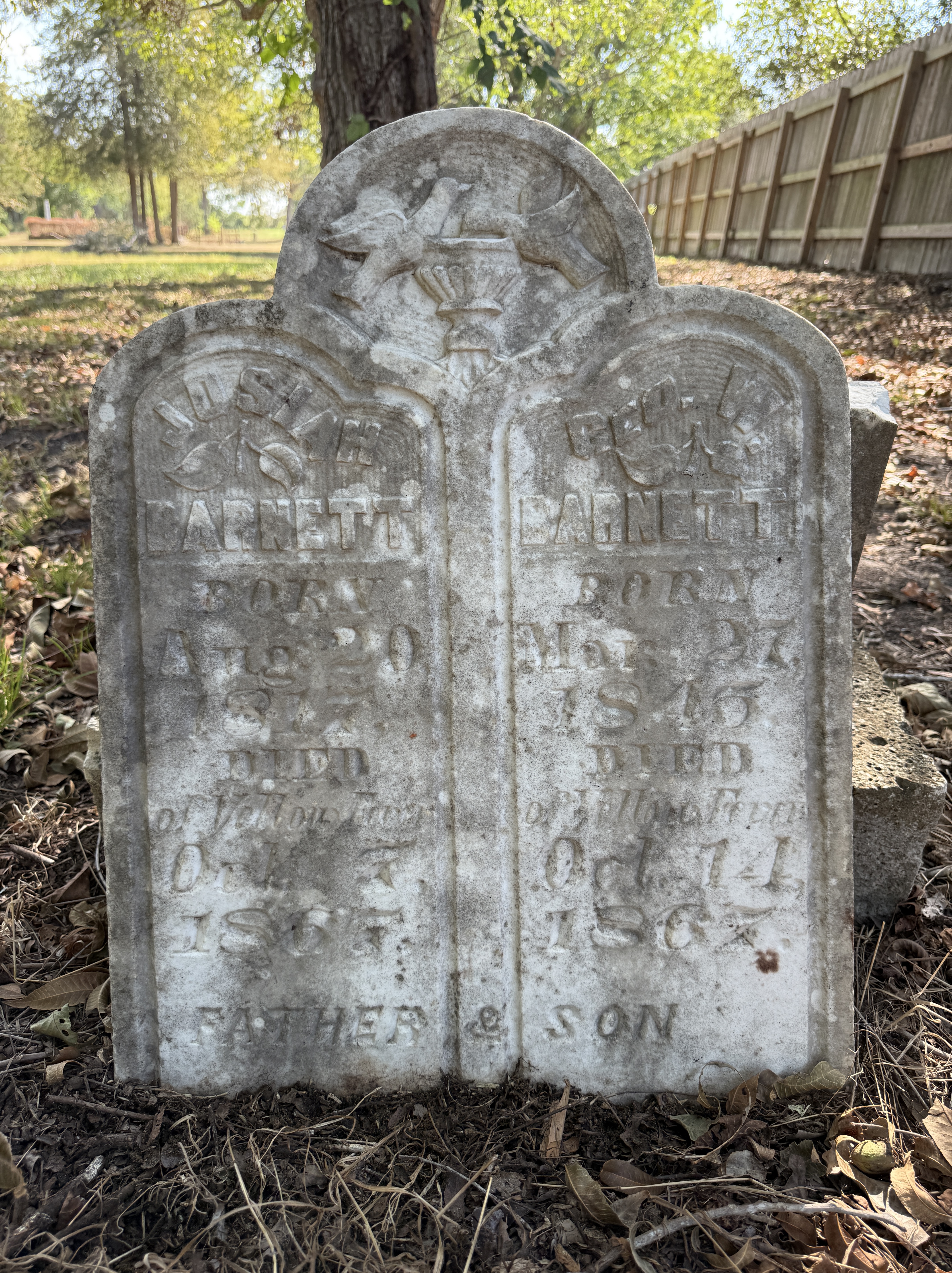
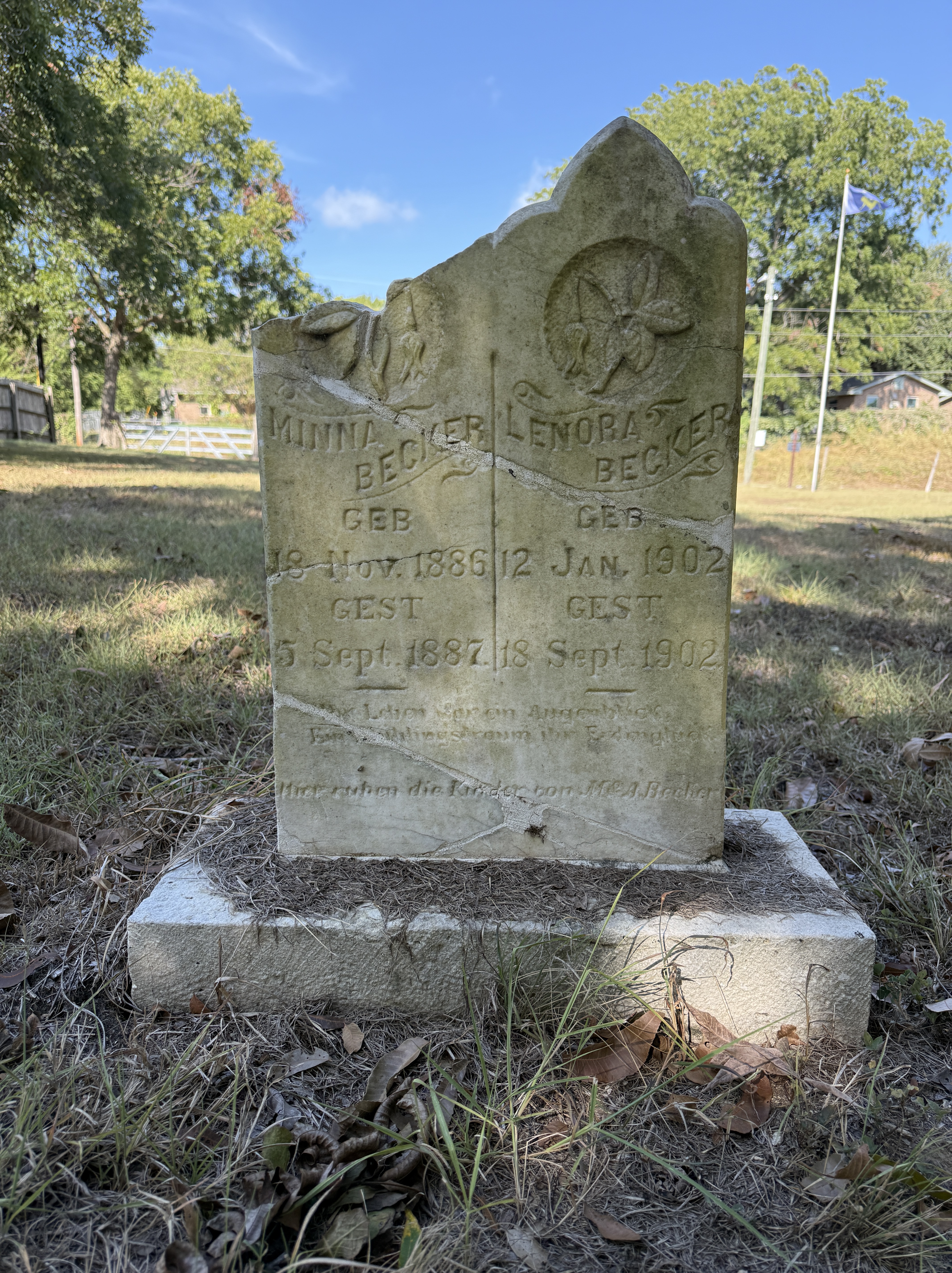
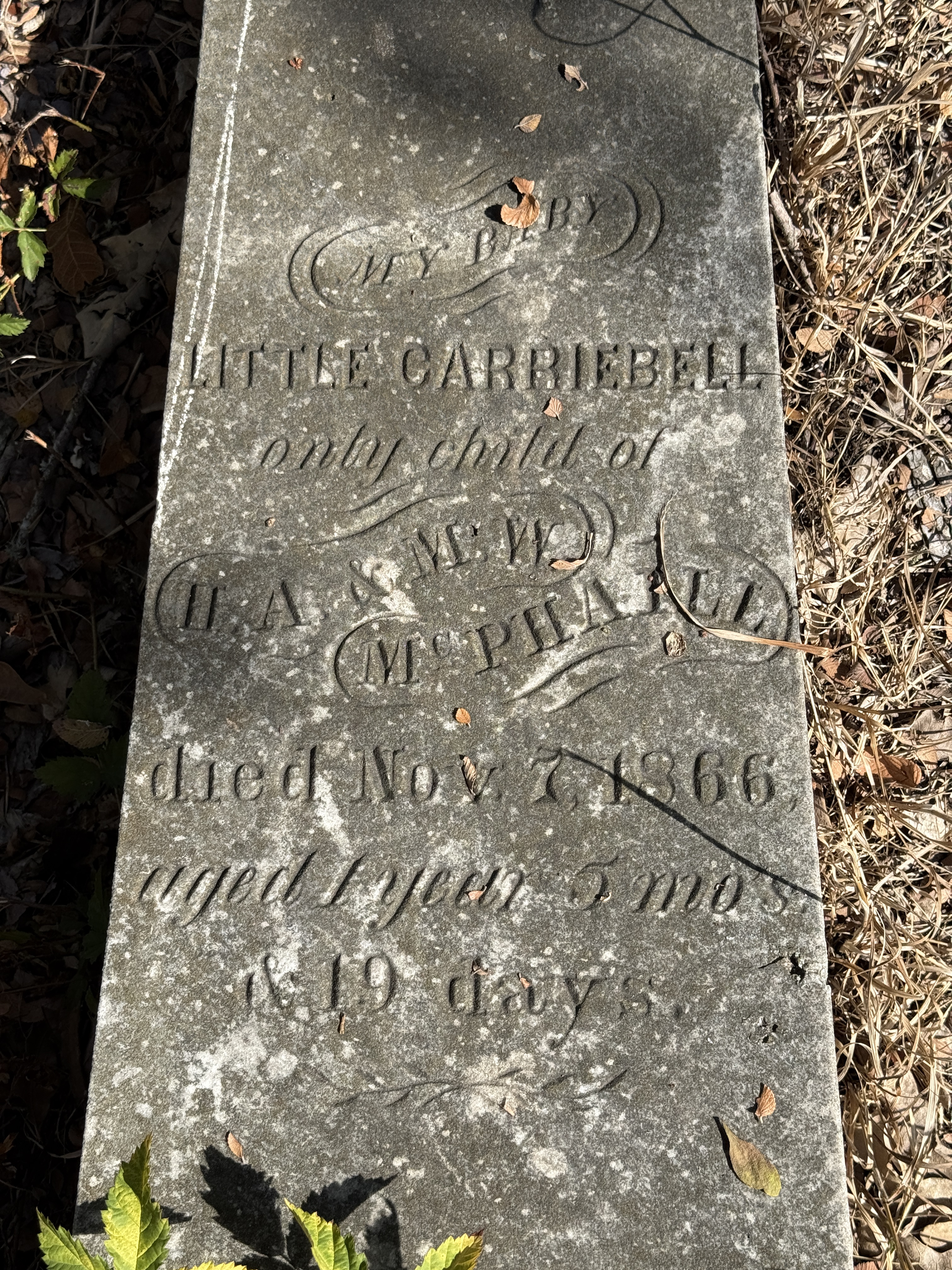
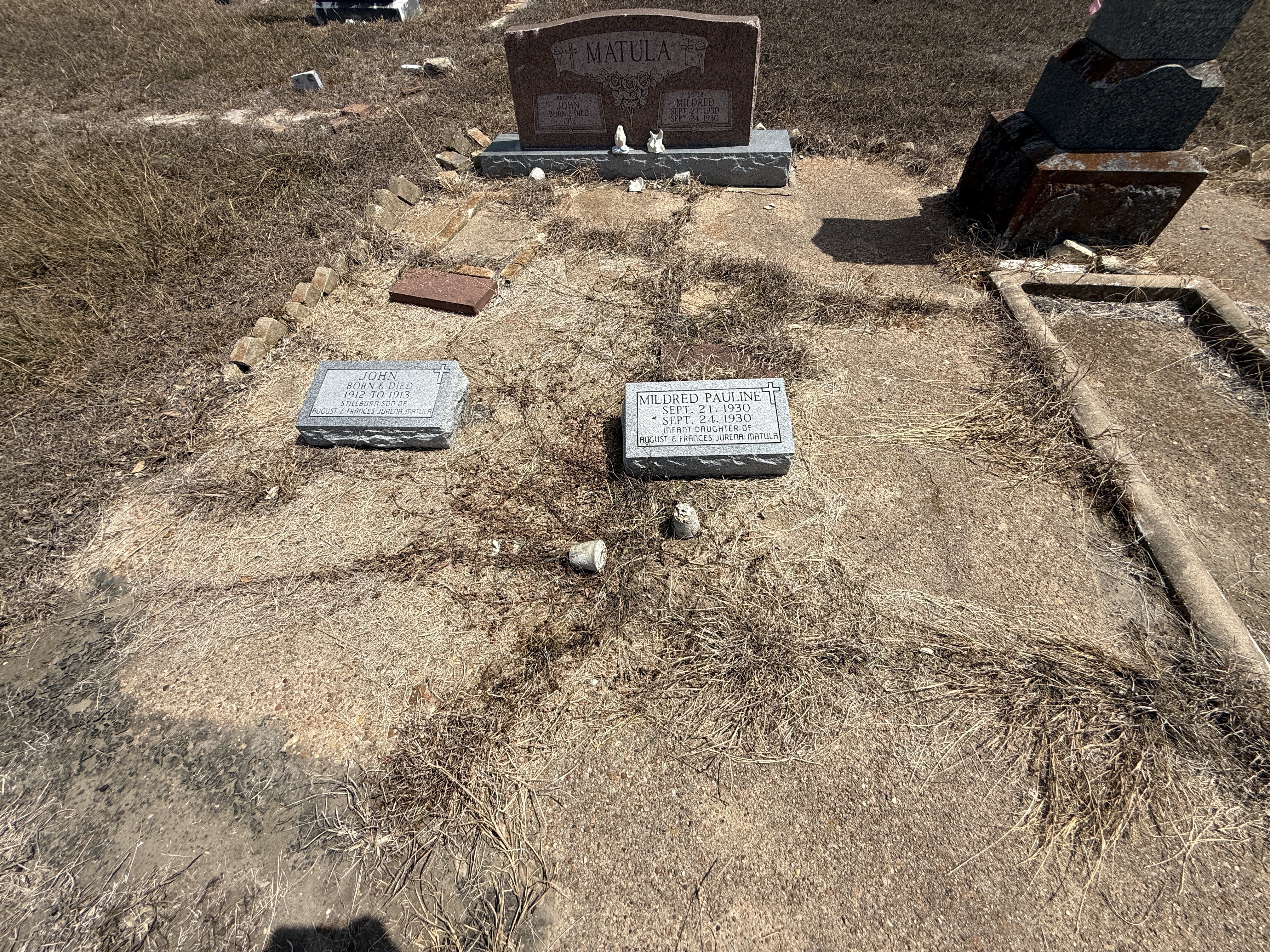
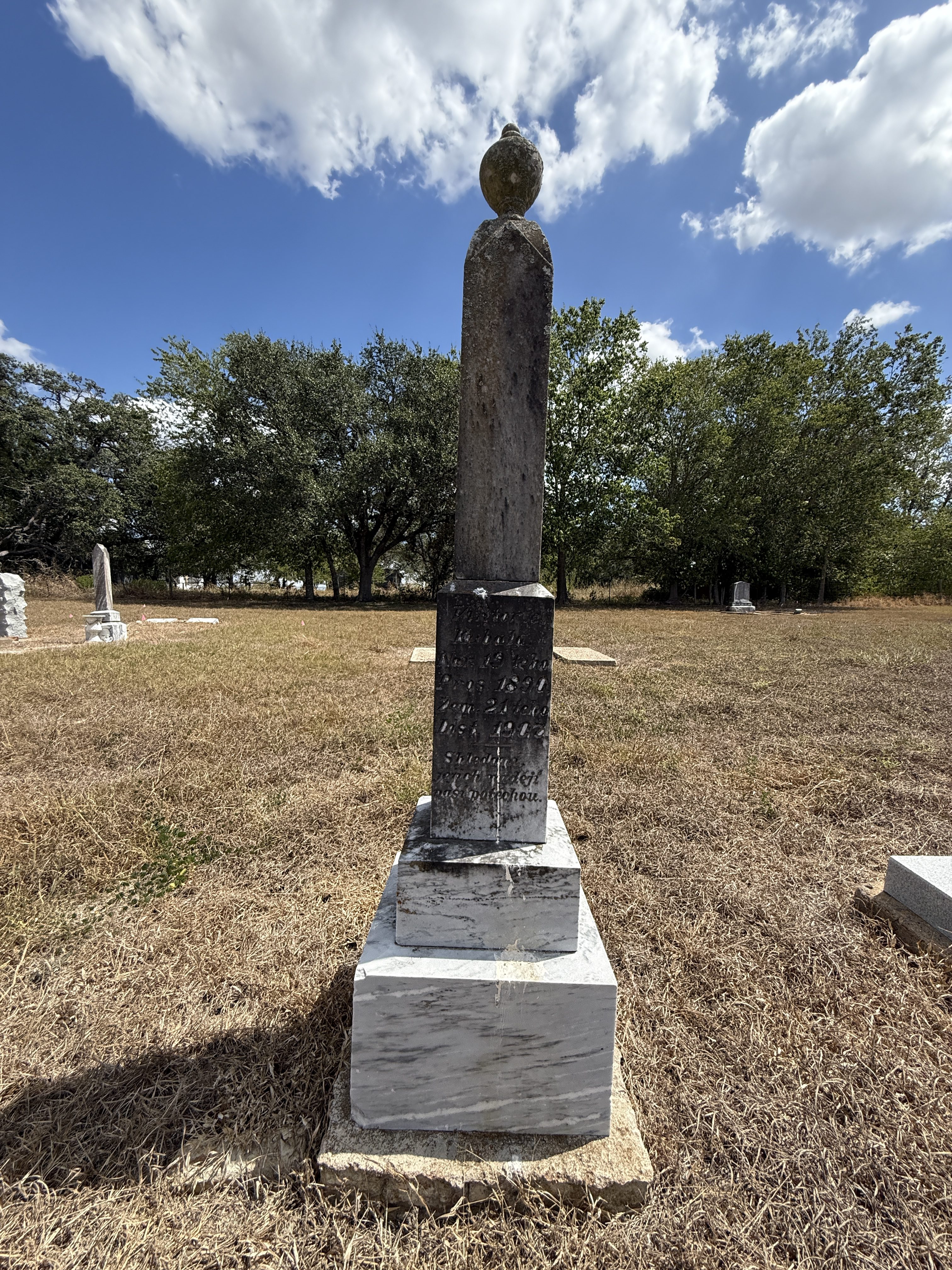
The fading Czech inscriptions on the headstones bear the names of Moravian immigrants who crossed an ocean, built a small community on the Texas prairie, and buried their loved ones far from the land of their birth. As in many old Texas cemeteries, I came across the graves of children whose lives were heartbreakingly brief.
Whenever I visit an old historic cemetery, I can easily envision the mourners—family members, friends, and neighbors — who once stood beneath the Texas sky to pay their final respects. I think of those who commissioned the headstones, some more elaborate than others, to mark the places where their loved ones were laid to rest. They likely never imagined that the names and epitaphs carefully carved into stone would one day be slowly erased by time.
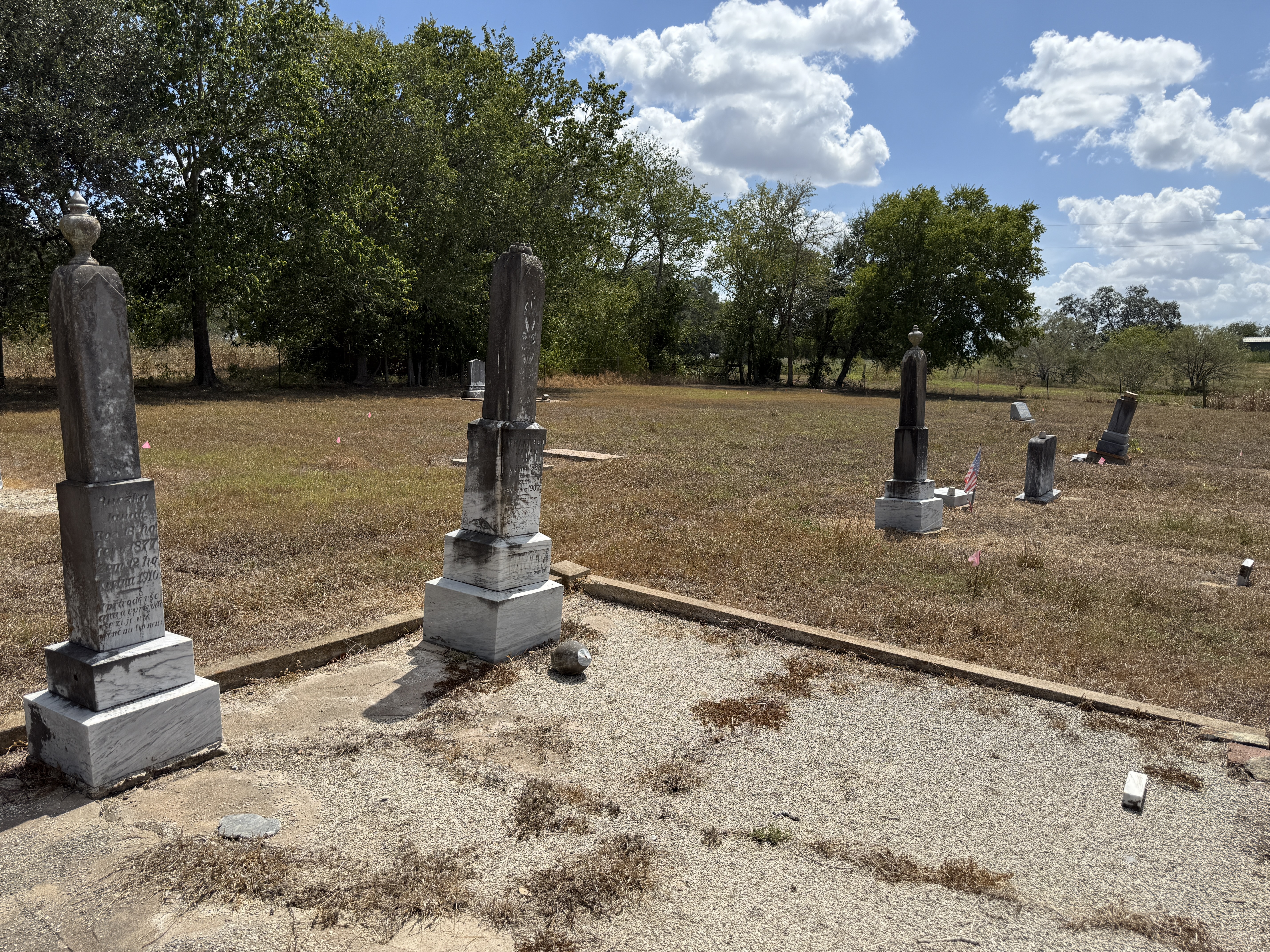
I am not trying to be morbid, but these old cemeteries remind me that one day I, too, will be laid to rest. In time, whatever marker is placed over my grave will begin to lose its battle against wind, weather, and time. Slowly, my name will fade from the stone. My photograph will no longer hang on anyone’s wall, and everything I once owned will either belong to someone else or have long since been discarded.
That is simply the sobering reality of life and death—and one reason I am determined to make the most of every day. I want to live, love, and serve well during the small slice of time I have been granted on this earth. And as a follower of Christ, I want to write such a good script for my dust that, long after I am gone, it will continue telling the story of a life well lived for as long as possible.